“The account was overspending every single morning and starving the hours that actually converted. We'd suspected it for a while but I struggled timing the daily spend adjustments right to counter the morning overspending. I set up an agent routine and trained it over a few days in Converge and now spend is optimized and automated.”
Zach Duncan · Media buyer, Michael Todd Beauty
Michael Todd Beauty is a Florida-based beauty brand that has been building at-home skincare devices since 2008, best known for its viral Sonicsmooth dermaplaning tool. The brand has amassed over 10,000 five-star reviews and a long list of Allure and Vogue features.
The paid media operation matches that scale. The account launches hundreds of new ads per week, and the media buying team is responsible for keeping blended efficiency in line while volume keeps climbing. At that cadence the constraint stops being creative supply and becomes attention: every hour the account runs unsupervised is an hour where budget drifts to the wrong place and a winner sits unscaled.
Zach Duncan, media buyer at Michael Todd Beauty, built an agent layer on top of the account with routines that read performance on a schedule, propose specific changes, and route them to Slack for approval. He used it to fix a structural dayparting problem, compress the time between a winner appearing and a winner getting funded, and close the loop between media buying and the creative team.
Zach and Leo, Michael Todd Beauty’s CMO, pulled hour-of-day performance and found a clean mismatch: the account was spiking spend in the morning, then throttling through the evening, precisely inverting the conversion rate curve. The highest-intent hours were the ones getting starved.
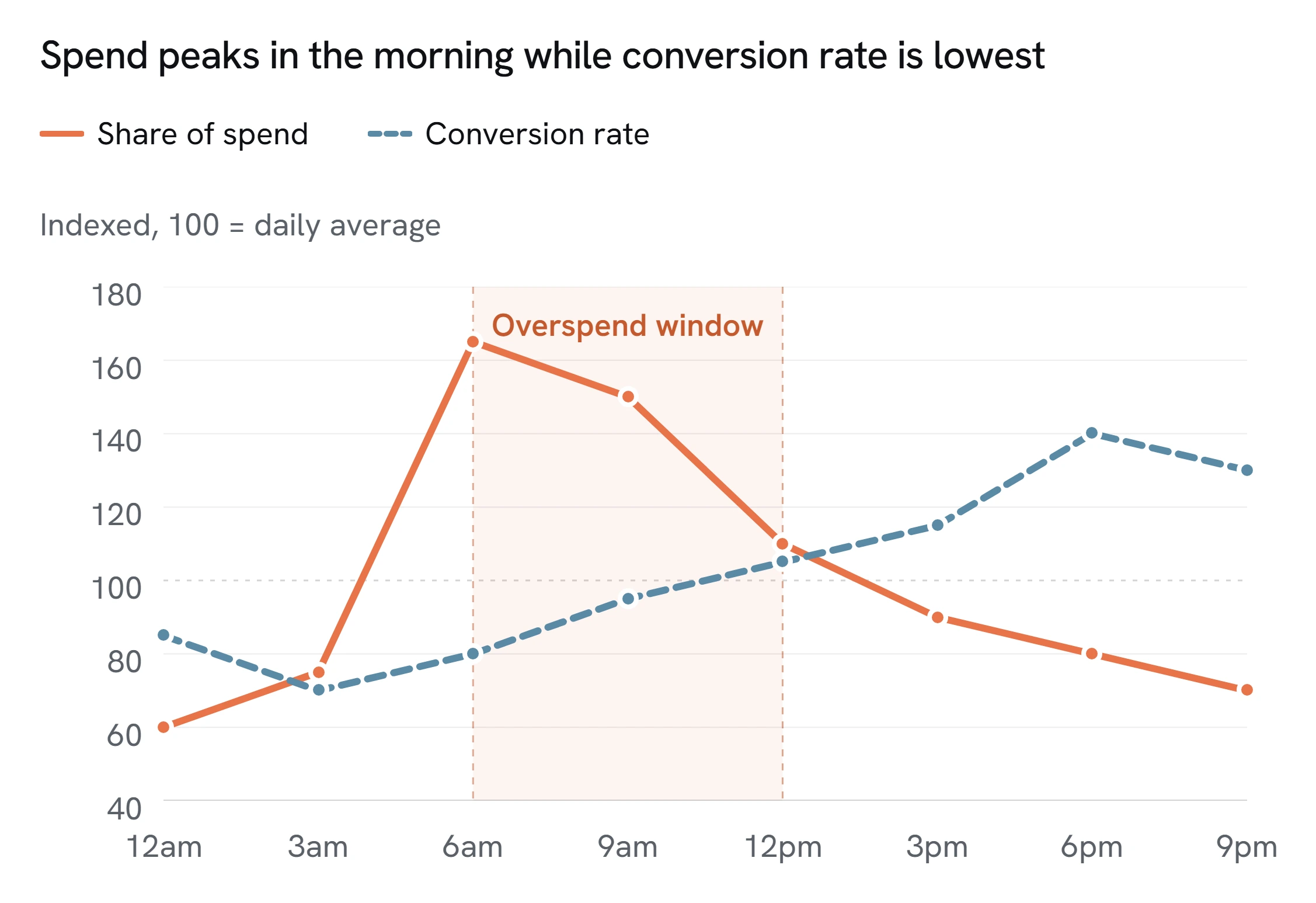
Result: 39% of budget was landing in the weakest hours of the day, and correcting it by hand meant timing daily spend adjustments precisely enough to counter the morning spike, every day.
Zach set up a morning scale-up routine and an evening scale-down routine on a daily schedule. The morning routine surfs spend toward the campaigns and ads carrying the day; the evening routine pulls back on the losers before overnight waste accumulates.
Neither pushes changes autonomously. Each posts a proposal to Slack with its reasoning and the specific edits, and Zach approves or rejects.
Impact:
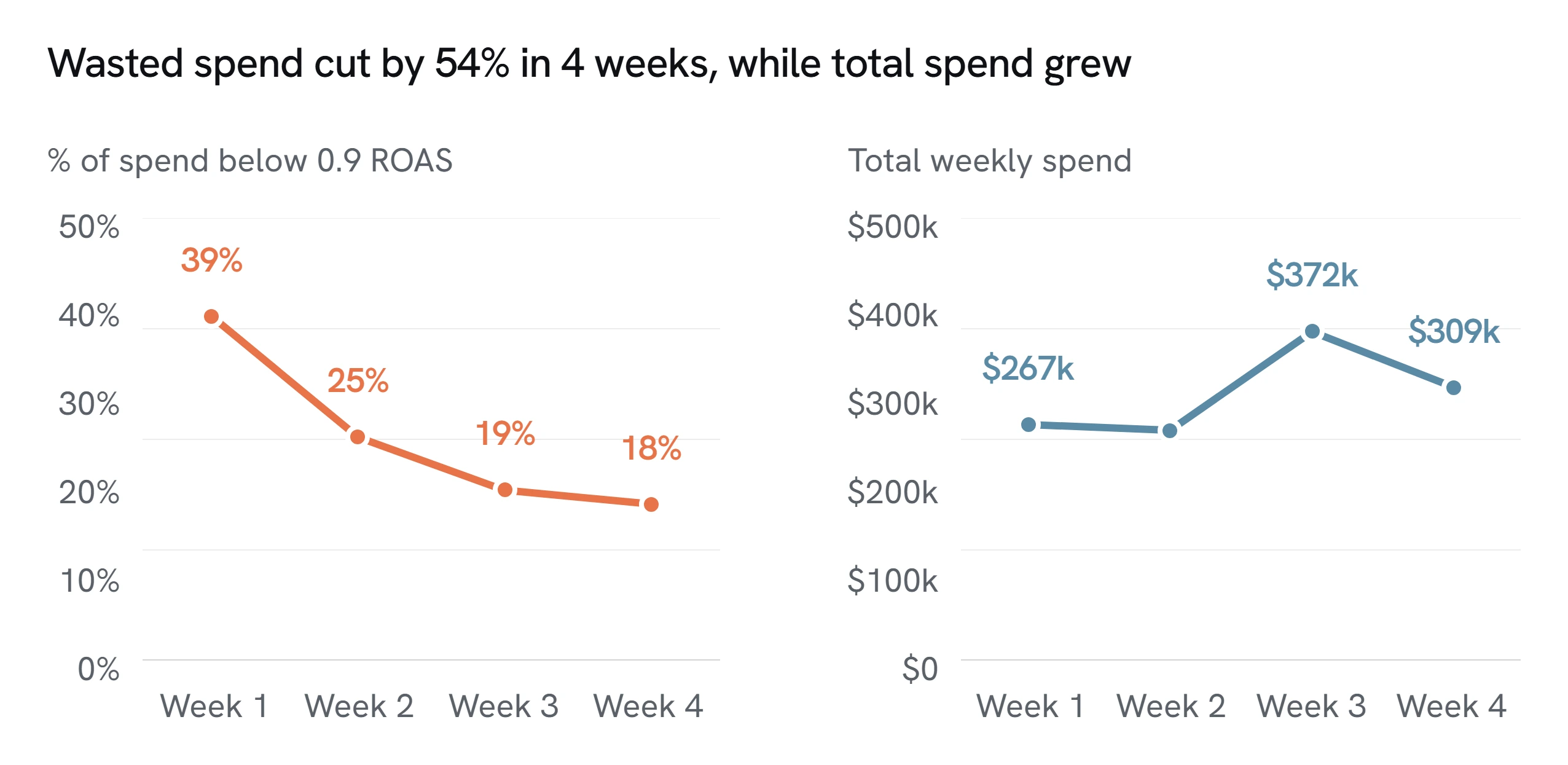
At Michael Todd Beauty’s launch cadence, the number of decisions available on any given day exceeds what one person can realistically evaluate. Winners were found, but later than they could have been. Zach and Leo found 38.9% of spend was sitting on ads below a 0.8 clicks-only ROAS, dragging down overall MER.
Result: more than a third of weekly spend was funding ads the team would have paused if they had had time to look at them.
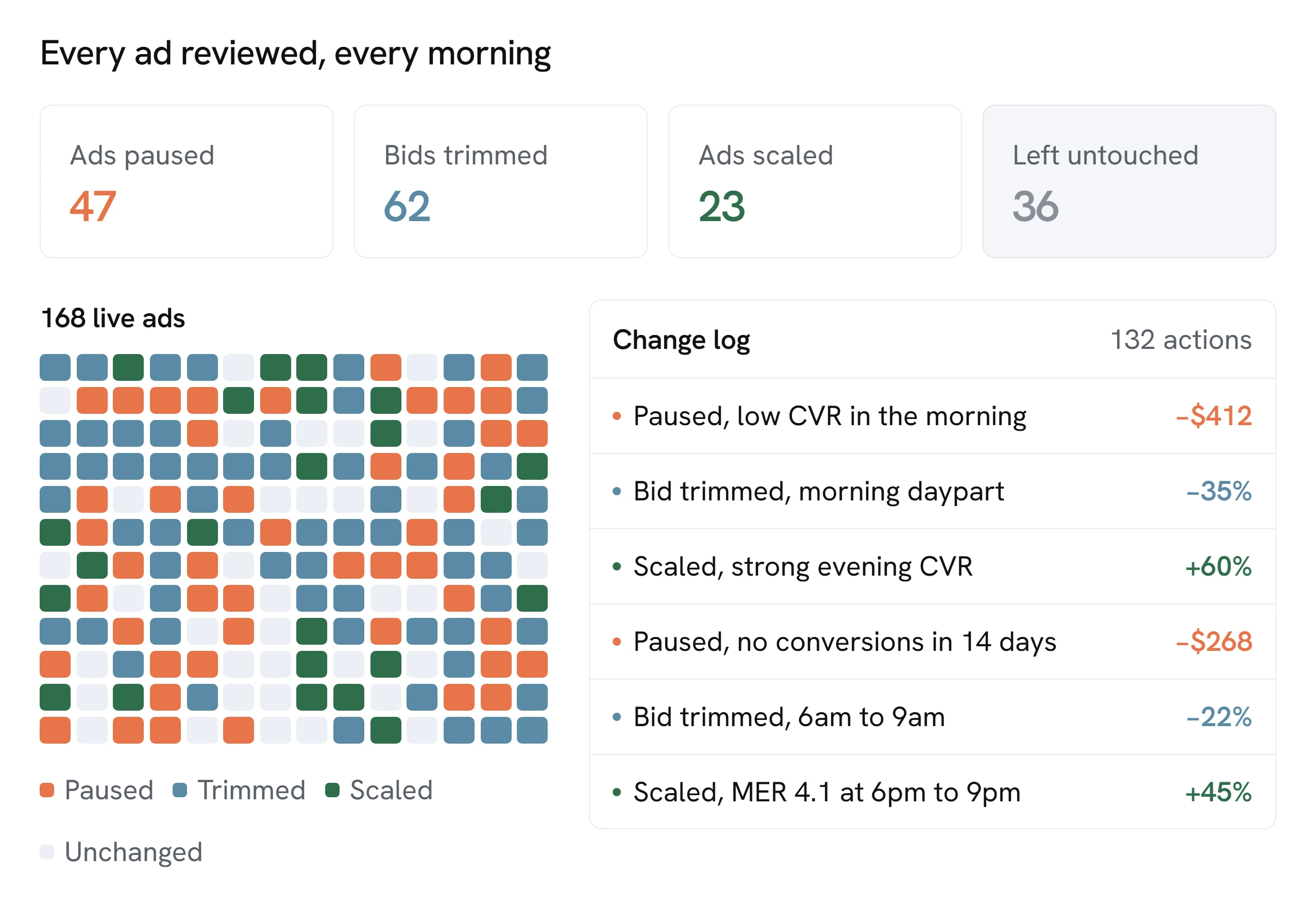
Most of the wasted spend stopped once a daily routine took over. Every morning it reviews every ad below 0.8 ROAS across the last 7 days and sends Zach a plan with the specific adjustments it recommends.
Zach does one of two things with each plan: approves it, or gives feedback on what should change next time. Every session is written to memory, so context carries forward and the routine picks up any changes made to the ads between plans.
Impact:
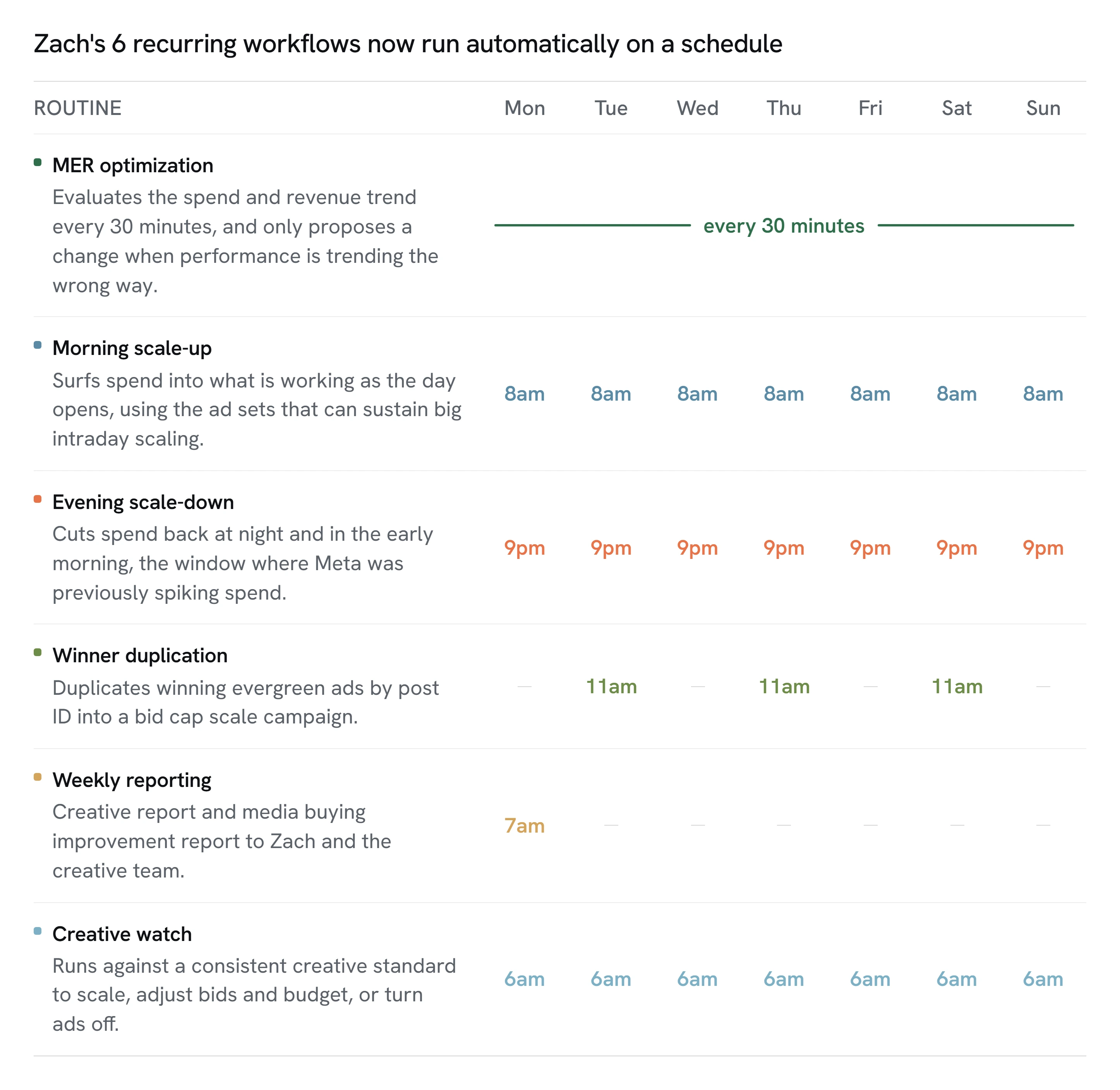
The pacing and daily creative watch workflows are two pieces of a broader system Zach set up on Michael Todd Beauty’s ad account.
The six routines that run for me are like my six worker bees running around the clock, constantly monitoring every possible area of opportunity.
Zach Duncan, Media buyer, Michael Todd Beauty
Every proposal lands in Slack. Every change is approved by a human. The agent handles the analysis and mocks up the changes, and Zach approves or rejects with feedback so the next plan is better than the last one.